Some of the outcomes
- −40%swap failures in 90 days
- 50,000subscribers in under 3 months
- +150%user adoption in 4 months after the portfolio redesign: users stayed longer and kept coming back
- <2 monthsAI-agent trading (MCP), first spec to launch
- 5 clicksto connect an AI agent to a perp DEX MCP on Ethereum, under 30 seconds
- +50%wallet connect to first trade, +35% new-user retention, 14 days after the onboarding redesign
What I do
- 01
AI automation & agent workflows
Agents and workflows that act for your users or your team, with the permissions and onboarding that make them safe.
AI-agent trading, Yellow - 02
SaaS platforms
Accounts, onboarding, dashboards and permissions for a product people log in to. I scope it, design the flows and write the tickets.
Crypto payments platform - 03
Mobile apps
From idea to a clickable prototype and a backlog your developers can build from. Flows, screens and acceptance criteria for iOS and Android.
Mobile apps & platforms studio - 04
Landing pages & websites
A page that says what you do in ten seconds and gets visitors to the next step: a booked call, sandbox access, a marketplace listing or a signup. I write the message, design the page and ship it to production.
Yellow landing page
Portfolio
- 01
Two pages answered one question. I merged them.
Managing the redesign of Yellow's Portfolio page and folding the Assets page into it: five views, fifty specced states, one place for your money.
RedesignScoping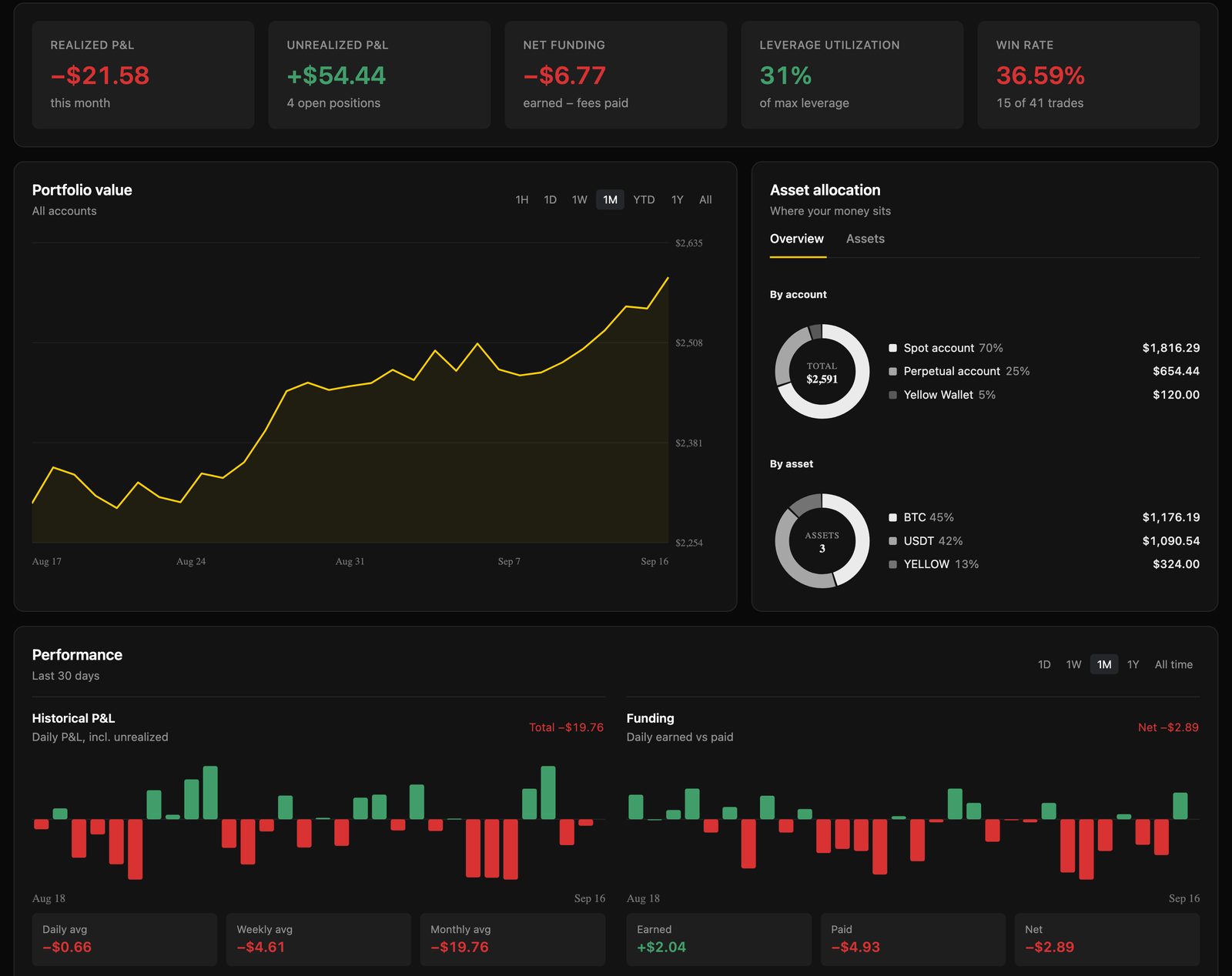
- 02
Cutting swap failures by 40% in 90 days
Taking a wallet's swap funnel apart, betting on the right three fixes, and putting the number on an alert. Best Wallet, 35,000 MAU.
Funnel teardownKPI & alerting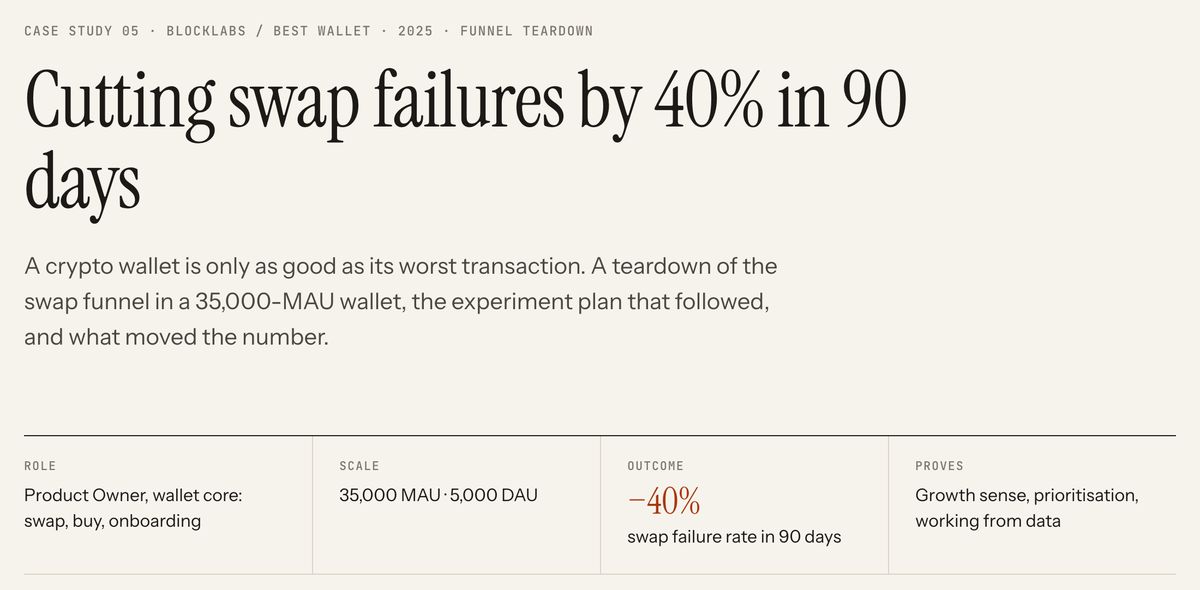
- 03
Letting an AI agent trade on your exchange account
An open-source MCP server, isolated agent accounts and an onboarding a non-developer can finish. Yellow.pro, 2026.
Technical platform0→1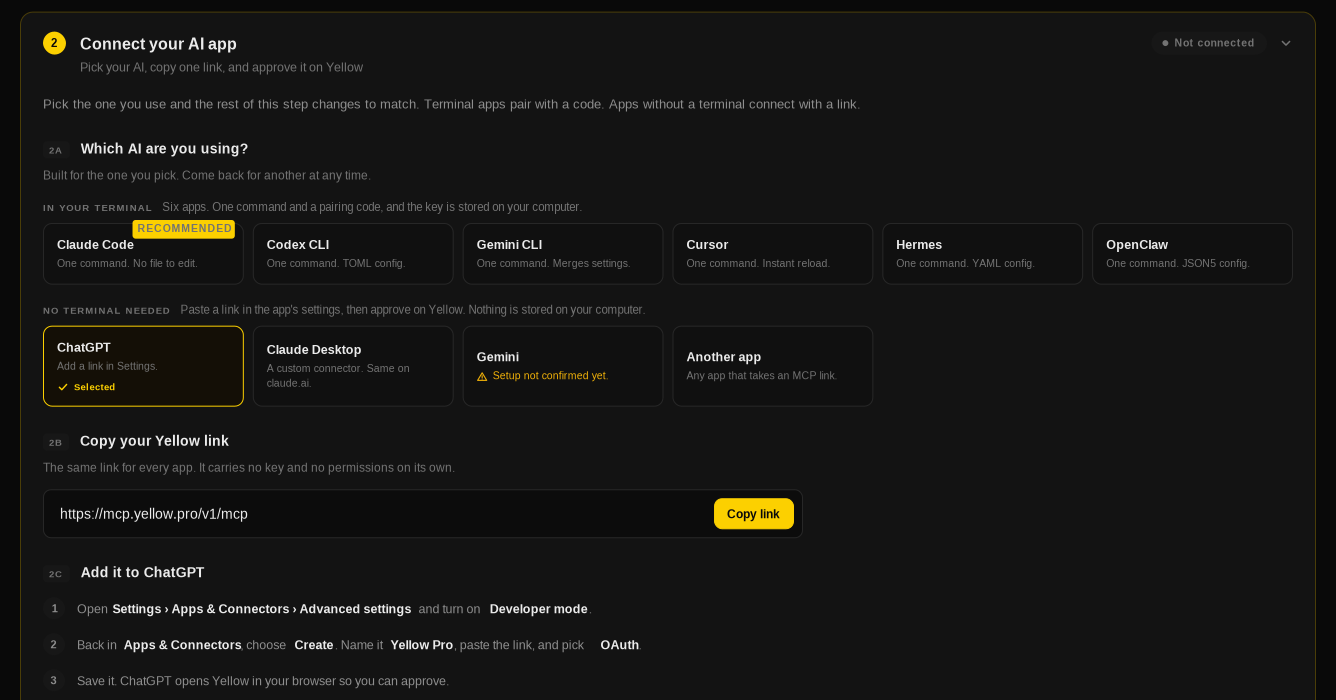
- 04
Crypto payments: an API operators can trust
Reconciling an integration guide with its OpenAPI contract, a production UAT, a 73-scenario stage environment, and a compliance design where the platform supplies data, not decisions. Client anonymised.
API & backendCompliance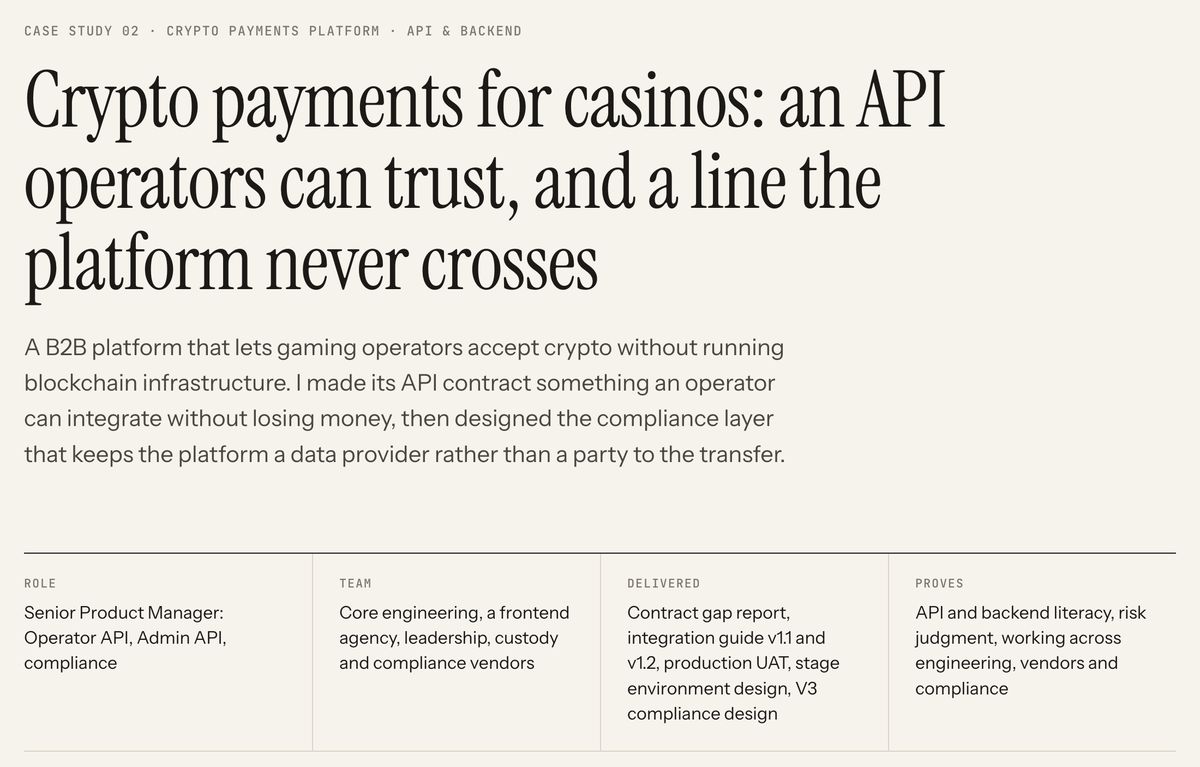
- 05
A landing page where every claim is provable
Yellow's first public front door, plus Fees and Markets pages: positioning, copy rules and geo routing, from brief to build-ready tickets.
GrowthPositioning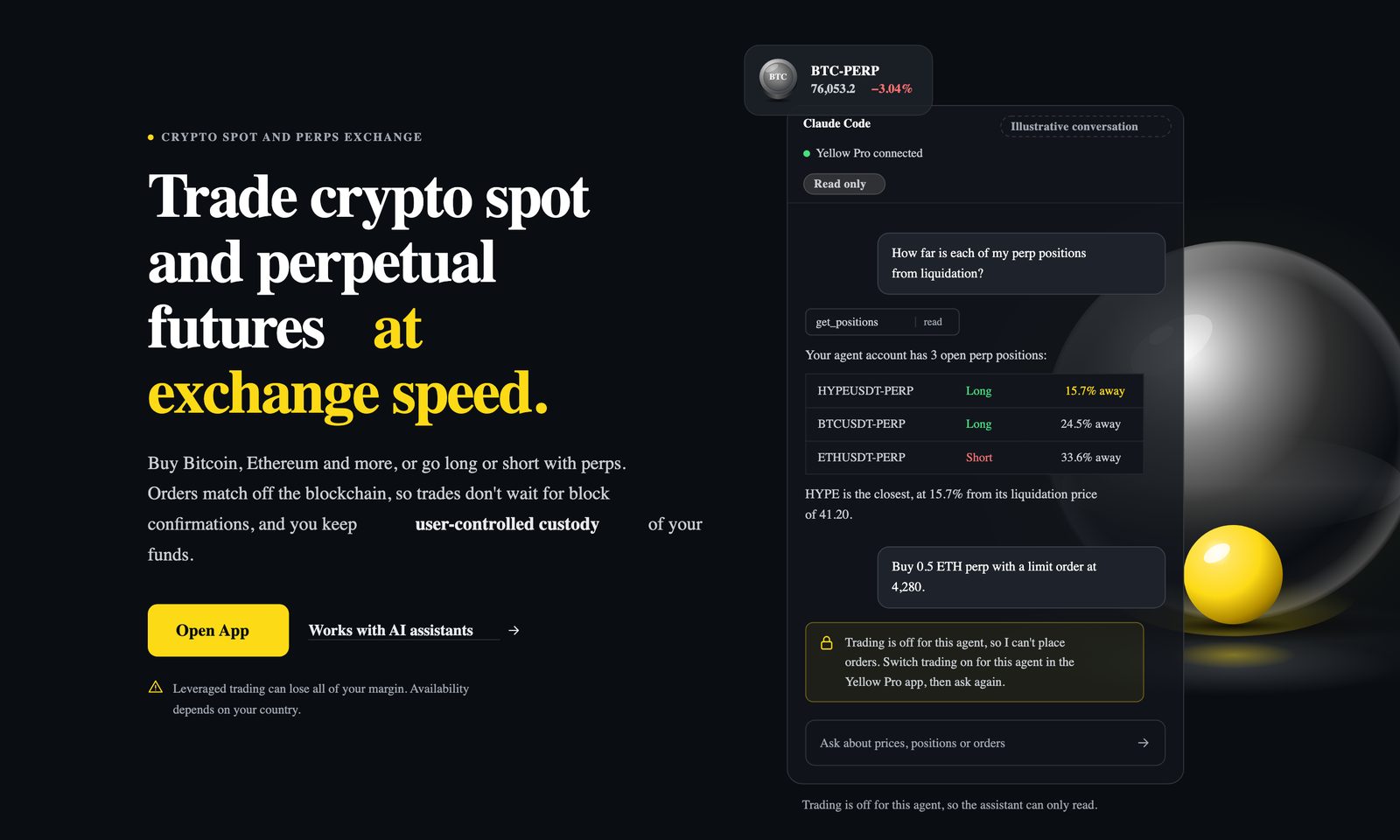
- 06
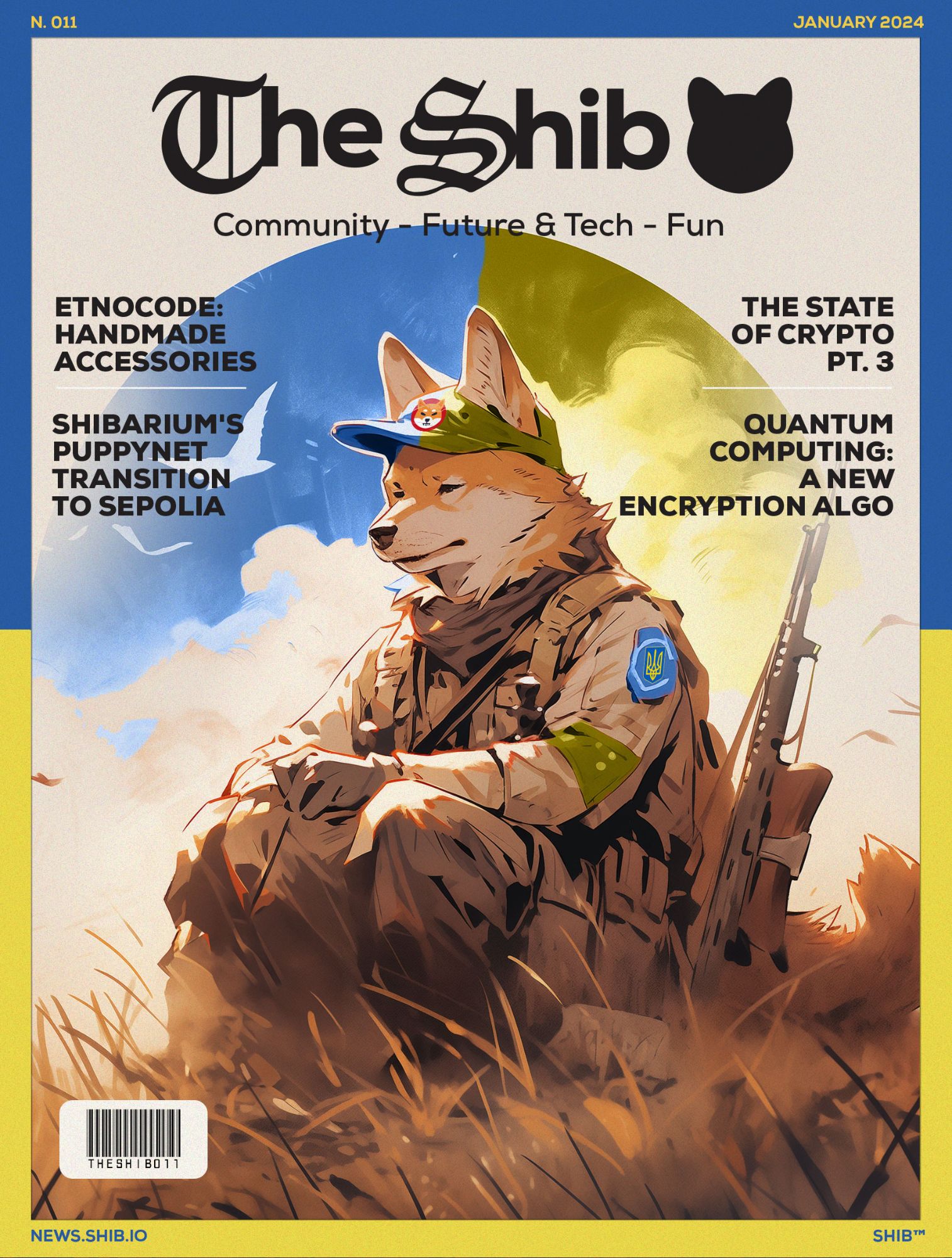
The Shib: a magazine from zero to 50,000 subscribers
A media product launched inside a crypto community: a weekly edition whose cover dropped as a free NFT, 50,000 subscribers in under three months, and $30K a month from sponsors.
0→1Growth loopRevenue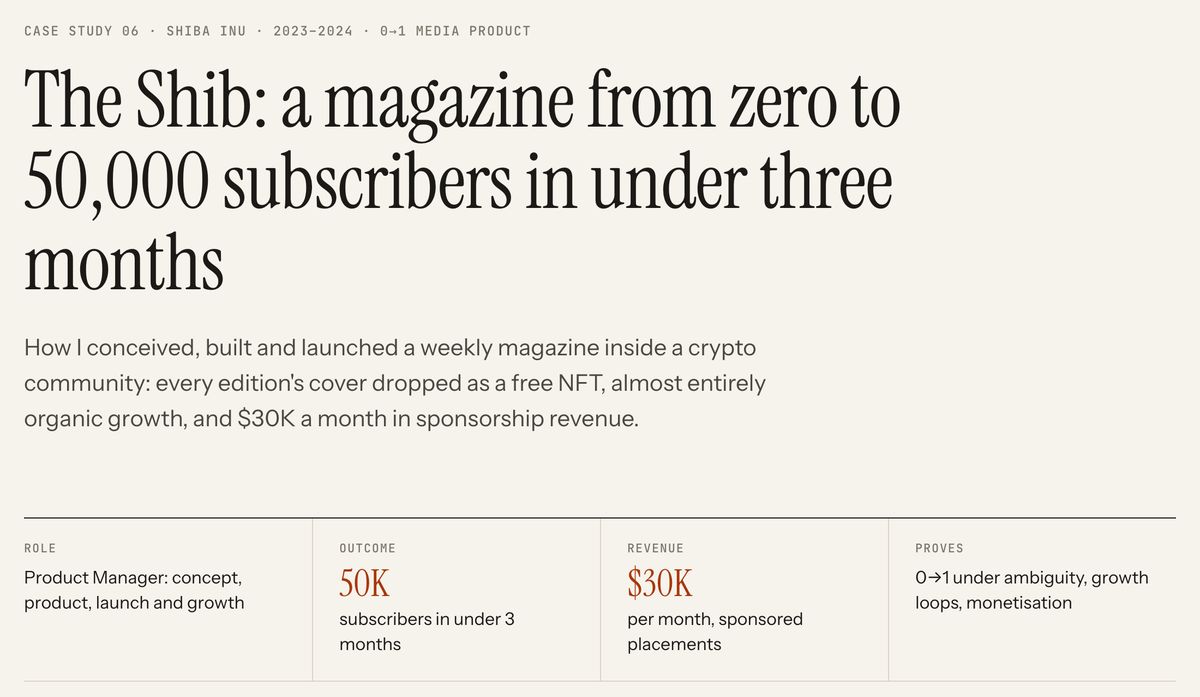


Also shipped: Yellow's portfolio redesign (+60% adoption in 2 months), mobile redesign and onboarding epic, ShibaSwap's V2 to V3 migration (+15% TVL in under 60 days), VegaX's automated Bitcoin strategies and crypto index products (several launched, +20% engagement in 30 days, +150% adoption in 4 months). Full portfolio →
Which PM you get
Most teams need one or two of these at a time. Each comes with work that proves it, from case studies. All six on one page →
0→1 PM
Takes a vague ambition to a first version people use.
- Yellow AI-agent trading an open-source MCP server, a hosted connector and in-app agent onboarding, from no definition to shipped →
- The Shib a media product from zero to 50,000 subscribers in under three months and $30K/month →
- VegaX crypto index strategies on the top 5 DeFi projects and the top 5 EVM L2s, built in under 3 months (2021)
Typical fit · Sprint · Full-time
AI-native PM
Builds AI products, and builds product work with AI.
- Agent workflow about a dozen specialist agents, from question rounds to QA →
- Yellow MCP AI agents trading from an isolated sub-account, safely →
- Best Wallet an AI support chatbot on Intercom for self-serve support
Typical fit · Every tier
Technical PM
Owns APIs, protocols and the contract engineers build against.
- Crypto payments API integration guide reconciled with its OpenAPI contract, a 73-scenario stage environment, a demo dashboard and a compliance interface →
- Yellow MCP tool surface, authentication and the read / trade permission model →
- Konstellation 80+ validators onboarded on a Cosmos Layer-1
Typical fit · Sprint · Spec review
Research & UX PM
Talks to users, then designs the flow they will use, before writing a requirement.
- Schneider Electric 15+ discovery interviews and workshops to validate a SaaS dashboard MVP
- Yellow agent onboarding a clickable in-app flow prototyped from zero, iterated fast with my own UX, UI and motion-design skills for Claude →
- Merchant compliance dashboard the compliance and risk view of a crypto payments provider's merchant portal, prototyped from 0 to 1
- Yellow landing page an existing exchange page reworked in fast prototype rounds into a build-ready spec →
- Payments admin panel an operational dashboard reviewed screen by screen and re-prototyped →
Typical fit · Sprint · Audit
Growth PM
Finds where a funnel leaks, sets the metric, and bets on the fixes that move it.
- Best Wallet swap failures cut 40% in 90 days, on a 35,000 MAU wallet →
- ShibaSwap full redesign of the user flow and dashboard: +30% retention and +20% activation in 30 days, by cohort
- Yellow Perps Race a trading competition with a fee-funded prize pool, plus referral and KOL programmes
Typical fit · Sprint · Audit
Delivery PM
Gets a hard, multi-team thing over the line on a date.
- ShibaSwap V2 → V3 liquidity migration in under 60 days, +15% TVL on a $20M base
- Yellow Portfolio two pages merged into one: five views, fifty specced states →
- Yellow mobile full perpetuals parity on a phone, liquidation previews included
Typical fit · Fractional · Full-time
Seen enough?Book the 30-minute call →

Acclimatise before you push.
How an engagement runs
Scoping call30 minutes · free
- In
- Your product, your deadline and budget range, and any existing docs or links.
- Out
- The recommended tier, a price range, and whether a free discovery makes sense.
Details
You describe the product and the deadline. I ask about users, data, integrations and what "done" means, and whether the budget and the timing fit. You leave with a recommended tier and a price range, whether or not we work together. No contract yet.
Free discoveryA few hours · free
- In
- One follow-up conversation, and read-only access to the product and your analytics.
- Out
- A sized list of epics, the open questions, and the tier. The problem is stated here, not answered.
Details
Enough to size the work and price it, not to solve it. One follow-up conversation with whoever owns the product, and a read-only look at the product and your analytics. I note where it hurts and what I would need to find out.
Written scope and SOWWithin 3 working days · you sign, paid work starts
- In
- The sized epics, the open questions, and your answers to them.
- Out
- The written scope and the signed one-page SOW: epics, out-of-scope list, decisions, success metrics, tier, price and timeline.
Details
The free discovery becomes a scope you can hold me to: the epics, what is out, the open decisions with my recommendation, and what "done" means. Success is agreed as numbers: one north-star metric, the two or three that drive it, and the guardrails that must not drop.
On top sits a one-page statement of work: tier, deliverables, timeline, fixed price and terms. One master agreement per client, one SOW per engagement. No hourly tracking, no open-ended time and materials. You sign, the first payment is due per the tier's terms, and the paid work starts.
Research, KPI baseline and design validationWeek 1
- In
- Access to the product, your analytics and support tickets, 3 to 5 people to interview, and your design tokens or brand.
- Out
- A findings and constraints log, the KPI baseline (today's numbers and the gaps in what you track), a clickable prototype, and the locked design decisions.
Details
I use the product before I write about it: interviews with the people who know where it hurts, a pass over your analytics and support tickets, and the competitors' apps walked through with real accounts. The KPI baseline is recorded here, before anything changes. If nothing is tracked yet, the first ticket instruments today's product so there is still a "before".
Then clickable wireframes for the screens that matter, in your product's own design tokens, so the team reacts to a prototype rather than a paragraph. We walk it through with your team, and with a few of your users if you want sessions, and change it until the decisions are locked.
PRD and backlogWeek 2
- In
- The locked prototype, the written scope, and your engineers' questions.
- Out
- The PRD, a backlog with acceptance criteria and tracking events, and the engineering walkthrough.
Details
A PRD with the reason next to every decision, and a prioritised backlog with acceptance criteria your engineers can estimate without a meeting. The tracking events ship inside the same tickets as the features. I walk engineering and design through it and answer open questions in writing.
QA, analytics and documentationAlongside your build
- In
- Builds on staging, the backlog with its acceptance criteria and tracking events, and access to your analytics tool.
- Out
- A pass or fail result per ticket, verified tracking, a live dashboard and alerts, and the documentation.
Details
While your engineers build, I test each build on staging against the acceptance criteria, and failed checks go back as tickets. In parallel I check that the tracking events fire as specified, wire the dashboard and alerts to the metrics from the written scope, and write the documentation your team keeps: release notes, the user or operator guide, and the log of decisions. The implementation stays in your stack.
Release and measureRelease week · then weekly on monthly engagements
- In
- A build that passed QA, the dashboard, the KPI baseline, and the support tickets and feedback since launch.
- Out
- A signed go/no-go checklist, the release, and an impact report with the movement on every agreed metric and a ranked list of next bets. On monthly engagements, a weekly status with decisions needed.
Details
The go-live checklist: QA passed, tracking confirmed firing in production, documentation handed over. Nothing ships without your yes. After launch the numbers are read against the KPI baseline: what moved, what didn't, and what to bet on next, in an impact report rather than a claim. On monthly engagements this becomes the weekly rhythm: roadmap, rituals, releases, stakeholder updates.
Senior judgment, at agent speed.
A dozen specialist agents do the legwork. I make every call that matters.
Asks before it drafts
Every piece of work starts with a short round of questions and my recommended answer. We decide, then it produces.
Grounded in your docs
Your API, glossary and decisions in one knowledge base. Facts come from there, not a model's memory. Deleted at handover.
Nothing ships without a yes
Guardrails run as code. Each client gets an isolated workspace, and nothing of yours trains a model.
Three ways to work together
Discovery, KPIs, roadmap, PRDs, backlog, delivery and launch.
Flows, wireframes, clickable prototypes and UI in your design system.
Working prototypes, landing pages, preview deploys, small front-end fixes and internal tools.
Standalone project
One problem, one fixed price: a sprint, a product and UX audit, a competitive teardown or a spec review.
Best for Pre-seed or seed with no PM yet · a live app that is not growing · an integration or compliance deadline
€2,500 to €4,000per sprint · 1 epic or up to 3 small ones · 1 to 3 months
- You get
- Research and KPI baseline, clickable prototype, PRD, prioritised backlog with tracking plan, dev handoff
- Terms
- 50% upfront, 50% on delivery
Fractional PM
Two to five epics across one or two squads.
Best for Seed to Series A, until the first PM hire lands
€5,000 to €6,000per month · 2 to 5 epics · 1 to 6 months
- You get
- Roadmap, rituals, specs, KPI dashboards, stakeholder updates, release management
- Terms
- Each month: 50% at the start, 50% at month end, net 15
Full-time PM
Six or more epics, three or more squads, or a programme.
Best for SME or scale-up with a PM gap
€8,000per month · 6+ epics · 1 to 12 months
- You get
- Full product ownership, team leadership, metrics and reporting, hiring support, handover to your permanent PM
- Terms
- Invoiced at the end of each month, net 15
Every option is priced from one reference rate; the longer the commitment, the lower the effective rate. All prices exclude VAT. Scopes that include custody, trading or KYC flows carry a 10% premium, since the domain knowledge is scarce and the delivery risk is higher. Invoices are in EUR; USDC or USDT settlement is available on request. Typical effort, as an estimate only: about 10 to 20 hours a week for a Sprint, 25 to 35 for Fractional, 40 to 50 for Full-time.
Which option fits your scope?
| Signal | Standalone | Fractional | Full-time |
|---|---|---|---|
| Epics in scope | 1 | 2–5 | 6+ |
| Products | 1 | 1–2 | 3+ |
| PM skills needed (of 6) | 2 | 3–5 | 6 |
| Platforms (iOS, Android, web) | 1 | 2 | 3 |
| Engineering squads to coordinate | 1 | 1–2 | 3+ |
| Third-party integrations (payments, identity, data providers, partner APIs) | 0–1 | 2–3 | 4+ |
| Sensitive flows (money movement, identity, personal data) | 0–1 | 1–2 | 3+ |
| Time | 10–20 h / week | 25–35 h / week | 40–50 h / week |
Or one standalone piece of work
Product & UX audit
Your live app, taken apart flow by flow: where users drop, what breaks, what to fix first. A written report and a prioritised list, not a slide deck.
1 to 2 weeks · fixed · €2,000Competitive teardown
Three to five competitors' flows walked end to end with real accounts, compared on the dimensions that matter to your roadmap, with the gaps you can win on.
Fixed · €1,200PRD or spec review
A second pair of senior eyes on a document before it reaches engineering: missing states, unclear acceptance criteria, risky assumptions, in tracked comments.
Per document · from €500One person, not an agency.
As a product studio, the work falls into four areas, each with its own page: crypto and blockchain apps (wallets, custody, payments), DeFi and DEX products (swaps, liquidity, perpetuals), consumer apps (onboarding, retention, growth loops) and mobile apps and platforms (iOS, Android, SaaS). For fintech and crypto teams, the fintech and crypto product consultant page sums up how an engagement runs and what it costs.
You work with me directly, from the scoping call to the handover. I cap my billable time at about 50 hours a week across all clients, which usually means one Full-time client, or one Fractional plus one standalone project, so nobody gets the leftover hours.
In their words · LinkedIn recommendations
Read them in full on LinkedIn →He started from data, not opinion. When swaps were failing, he instrumented the funnel in Amplitude, broke the failures down step by step and by chain, and cross-checked them against support tickets before deciding anything. Swap failures dropped 40% in 90 days.
Under his leadership, The Shib became the first revenue-generating product within the Shiba ecosystem.
His strategic vision and meticulous attention to detail were pivotal in driving our blockchain initiatives from concept to successful implementation.
Notes from an AI-native PM
- Field note
I stopped installing AI skills straight from GitHub
Read on LinkedIn → - Part 1 of 4
One router, many specialists
Read on LinkedIn → - Part 4 of 4
An 11-agent council for expensive decisions
Read on LinkedIn →
Questions people ask first
What kind of studio is Crestline Product Labs?
Crestline Product Labs is a one-person product studio and lab based in Cyprus, run by Joris Colleret. I work on consumer apps (everyday retail and fintech apps included), mobile apps and platforms, crypto and blockchain apps and DeFi and DEX products: product management, design and basic coding, as standalone projects, fractional PM or full-time PM. This is not an agency: you work with me directly.
How fast can you start?
Taking engagements now. A Sprint can usually start within two weeks of a signed statement of work. Fractional and Full-time depend on current commitments; the scoping call gives you a real date, not a "soon".
Do you set up analytics and KPIs, or only use what we have?
Both. If you already track events, I audit them against the questions the product needs answered. If you don't, I write the tracking plan, define the north-star and guardrail metrics, and spec the dashboard with your engineers. The implementation stays in your stack and your tools.
Do you work under NDA?
Yes, and I expect to. Case studies are published only with permission and with proprietary details removed or generalised. Your product knowledge base is deleted at handover unless you ask to keep it.
Remote or on site?
Remote by default, and not only in European hours. I have worked with teams in Europe, Asia and the Americas and set fixed overlap hours with the team's time zone at the start of each engagement. On-site days for kick-offs, workshops or launches are possible and billed with travel at cost.
What if the scope grows halfway through?
It happens on most engagements. The current statement of work finishes as agreed; the new scope goes through the scope check and gets its own SOW, sometimes at a different tier. No surprise invoices.
Do you also design and code?
Yes. Design: flows, wireframes, clickable prototypes and UI in your product's own design system, and I run the design reviews. Code: working prototypes, landing pages, preview deploys, tracking events and small front-end fixes, so an idea can be clicked on a phone before it is specced. Production engineering of your core systems stays with your team; if you have none, I can introduce design and development studios I have shipped with.
Can we pay in crypto?
Invoices are issued in EUR. Settlement in USDC or USDT is available on request for the same EUR amount.
How is the contract structured?
One master services agreement per client, then one statement of work per engagement stating tier, scope, deliverables and price. Contracts describe deliverables and outcomes, not hours under direction. Professional indemnity insurance is in place.
Still have a question?Ask it on a call →